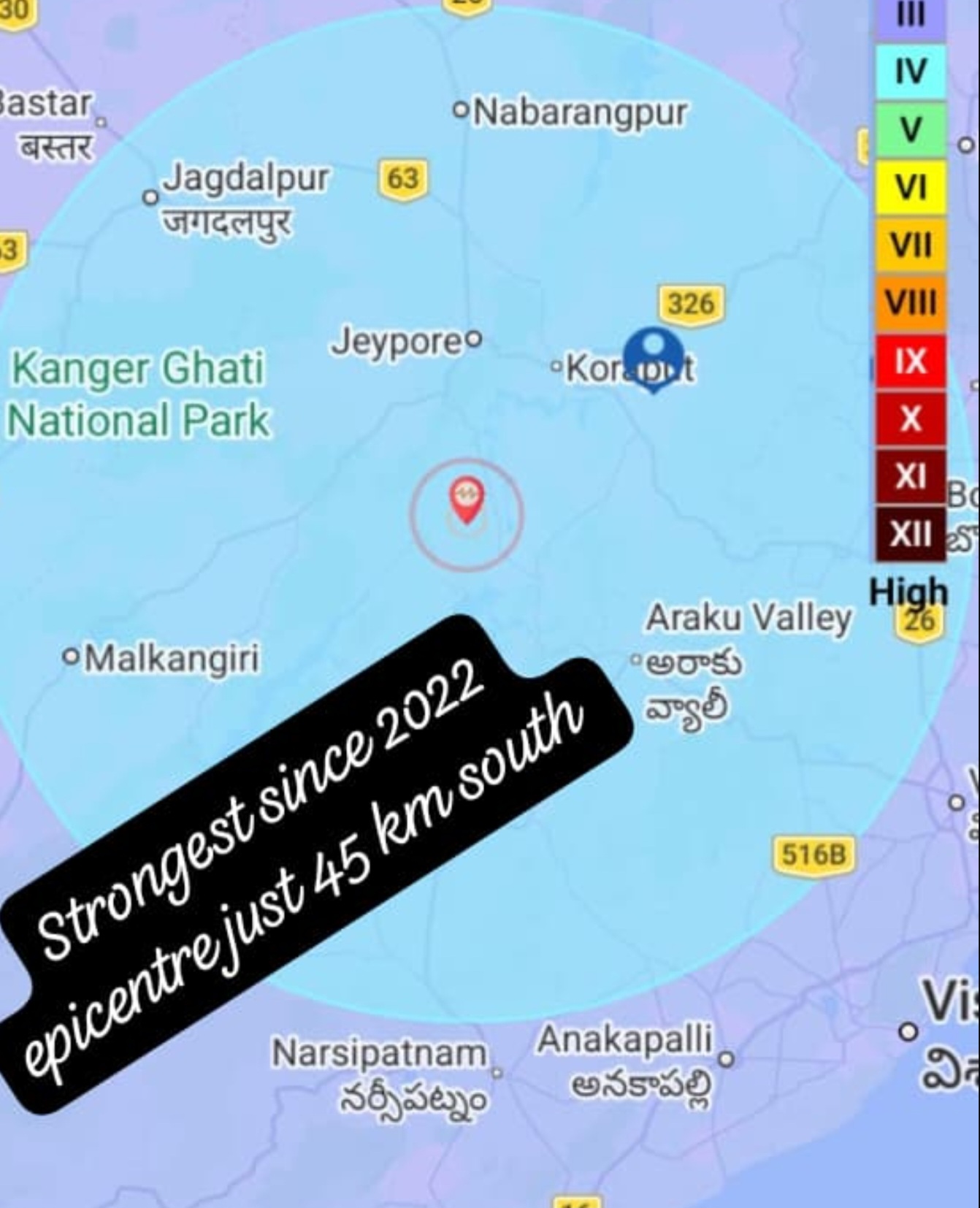
In Koraput district, the earth shook for seconds—but left behind a lasting question: are we building the future, or disturbing it?
In the serene hills of Koraput district, where mornings usually begin with mist hugging the valleys and evenings fade into quiet sunsets, life has always moved at a gentle, reassuring pace. The land is known not just for its beauty, but for its soul tribal traditions, forests whispering ancient stories, and a simplicity that feels untouched by the chaos of the outside world.
But on a recent day, that calm was shaken.
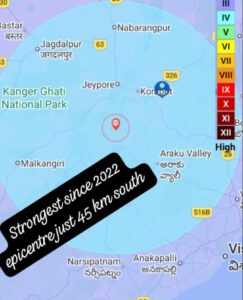
It wasn’t a violent quake. There were no collapsing buildings or screaming sirens. Just a sudden, unfamiliar tremor subtle, yet powerful enough to send a wave of fear through the hearts of the people. Walls trembled, utensils rattled, and for a few seconds, time itself seemed to pause. In those fleeting moments, Koraput didn’t feel like the safe haven it had always been.
In Koraput district, the earth shook for seconds—but left behind a lasting question: are we building the future, or disturbing it?
For many, it was the first time they felt the ground move beneath their feet. For others, like you, it was the second a reminder that something is changing, something is not the same anymore.
In villages and towns, people stepped out of their homes, eyes searching for answers in each other’s faces. Conversations began, not loudly, but with a quiet tension: “Did you feel it?” “Was it an earthquake?” “Is this going to happen again?” Children clung to their parents.
Elders recalled stories of the past, trying to find meaning in the present. And in that shared uncertainty, a deeper question began to take root—what does the future hold for Koraput?Because this wasn’t just about a tremor.
It was about a growing unease. About a land that is now standing at a crossroads. On one side, there is development roads, industries, promises of progress, and the push for tourism. On the other, there is nature fragile, sacred, and silently bearing the weight of change.
The hills of Koraput have always given more than they have taken. They have nurtured life, protected cultures, and offered peace. But now, with increasing human intervention, one cannot help but wonder are we listening to what the land is trying to tell us?
The tremor may have lasted only a few seconds, but its impact lingers. Not in разрушed structures, but in shaken thoughts. In the realization that progress without balance can come at a cost. In the fear that if we don’t act today, tomorrow may not be as kind.
Yet, within this fear lies hope.Hope that people will come together—not just to share the moment of panic, but to reflect, to question, and to act. Hope that authorities will look beyond immediate gains and focus on sustainable development. Hope that Koraput will not lose its identity in the race for modernization.
Because Koraput is not just a place.
It is an emotion. A living, breathing story of harmony between humans and nature.
And perhaps, this gentle tremor was not just a disturbance but a reminder.
A reminder that the earth beneath us is alive. A reminder that balance is not a choice, but a necessity. A reminder that the future of Koraput depends on what we choose today.
And as the hills return to their quiet rhythm, one question echoes softly in the air
Will we listen?



Post Comment