Fifteen Years Without Odisha’s Representation in the Supreme Court: Why Regional Diversity Matters
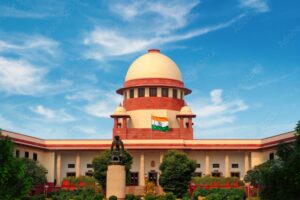
Fifteen Years Without Odisha’s Representation in the Supreme Court: Why Regional Diversity Matters.

By Sri Bibhu Prasad Tripathy,
Senior Advocate | Former President, All Odisha Lawyers’ Association.
The Supreme Court of India stands as the guardian of the Constitution and the final interpreter of the law. As the highest constitutional court, it is expected to reflect the diversity, federal character, and lived realities of every region of the country. Regional representation on the Bench is not merely symbolic it strengthens public confidence and enriches constitutional adjudication through varied judicial experiences.
Against this constitutional backdrop, Odisha’s continued absence from the Supreme Court has become a matter of serious concern. It has been nearly fifteen years since a judge from the Orissa High Court’s own judicial cadre was elevated to the apex court. Justice Dipak Misra, who was elevated to the Supreme Court on 10 October 2011 and later became the 45th Chief Justice of India, remains the last home-grown judge from Odisha to reach the nation’s highest court.
Although several judges have served as Chief Justice of the Orissa High Court before being elevated to the Supreme Court, they belonged to different parent High Courts. The distinction is significant because a judge’s parent High Court shapes judicial experience, understanding of local legal issues, and familiarity with the socio-cultural realities of that State.
Odisha has a distinguished judicial legacy. The State has produced eight Supreme Court judges and three Chief Justices of India Justice Ranganath Misra, Justice G.B. Pattanaik, and Justice Dipak Misra. The present gap, therefore, cannot be attributed to a lack of merit or capable judicial talent.
One of the major reasons behind this prolonged absence lies in delayed appointments and persistent vacancies in the Orissa High Court. Judges appointed later in their careers naturally occupy lower positions in the all-India seniority list, reducing their chances of elevation to the Supreme Court and limiting their tenure at the apex level. This structural disadvantage has gradually weakened Odisha’s representation in the higher judiciary.
Regional diversity has increasingly been recognised by the Supreme Court Collegium while recommending judges for elevation. The Collegium has previously acknowledged the importance of ensuring balanced representation from different High Courts and has considered future institutional diversity while making appointments. The same constitutional principle deserves equal application in the case of Odisha.
The issue extends beyond representation alone. Odisha is home to one of India’s largest tribal populations, extensive forest areas, mineral-rich districts, and unique cultural traditions. Constitutional disputes involving tribal rights, environmental conservation, mining, displacement, and religious freedoms frequently arise from the State. Judges who have spent years deciding such cases in the Orissa High Court bring valuable practical insight that strengthens judicial decision-making at the national level.
The celebrated Niyamgiri judgment remains an important example of constitutional protection for indigenous communities and environmental rights. While the Supreme Court delivered a landmark decision, the continued absence of Odisha’s own judicial voice on the Bench highlights the broader need for greater regional diversity in cases involving local realities.
Seeking representation is not a demand for quotas or special treatment. It is a call for fairness, institutional balance, and faithful adherence to the constitutional vision of a judiciary that reflects the diversity of India. Timely appointments, filling vacancies, and creating equal opportunities for deserving judges from Odisha would naturally strengthen the pipeline to the Supreme Court.As India continues to uphold constitutional values of equality, justice, and federalism, restoring Odisha’s voice in the Supreme Court would reaffirm the principle that every region of the country deserves a fair and meaningful voice in the Supreme Court of India.









Post Comment